
Colorfastness refers to the ability of a fabric’s color to remain intact against effects such as use, washing, sunlight or friction. Today, this property is seen as a critical parameter in terms of quality and customer satisfaction in the textile industry. Maintaining the first day appearance of the products for a long time both increases consumer satisfaction and strengthens brand reliability.
Colorfastness tests, which are widely used in the textile industry, are applied according to certain standards. These tests ensure quality by objectively measuring the performance of products under different conditions.
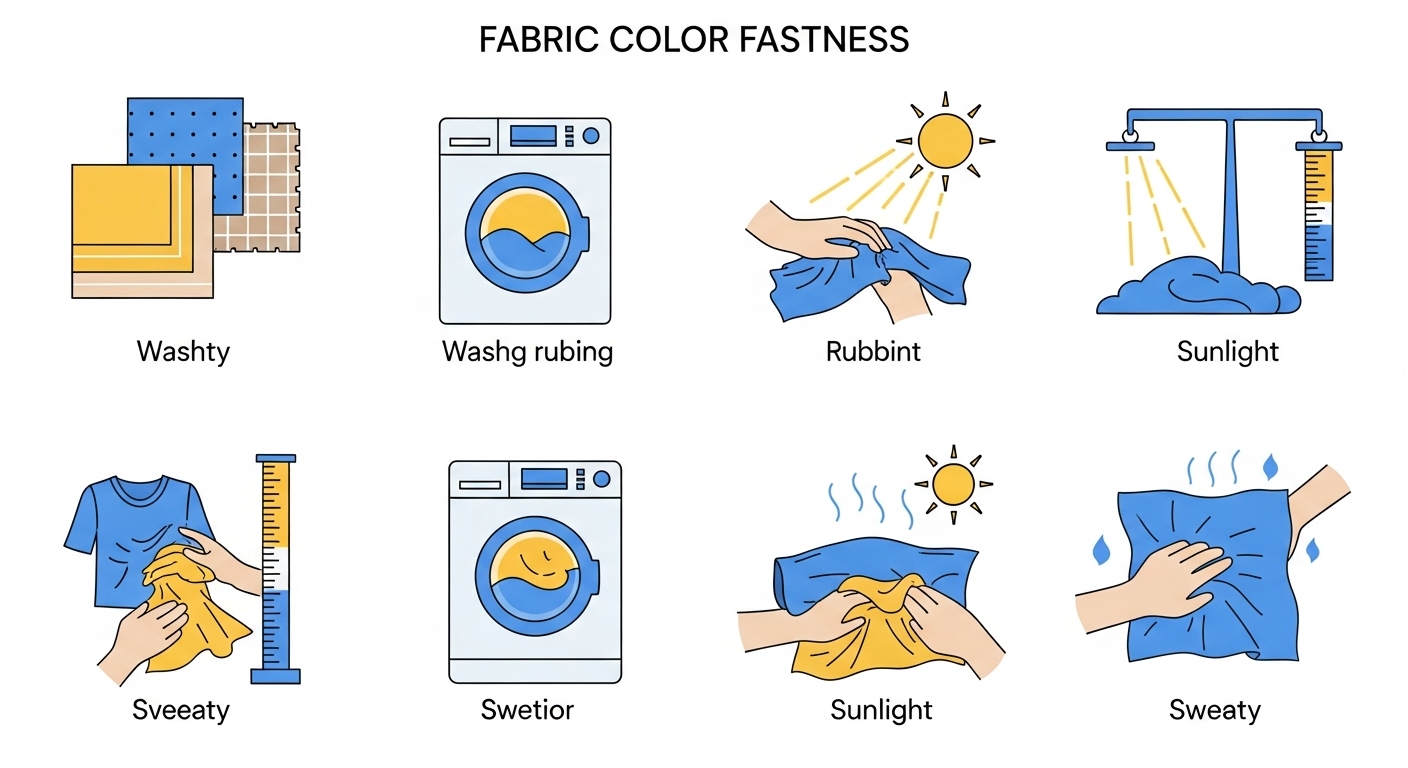
- Resistance to Washing: In tests carried out under specified temperature and detergent conditions, color fading of the fabric and color transfer to other fabrics are evaluated with gray scales.
- Friction Resistance: It is checked whether the fabric leaves color under dry and wet friction conditions. This test is especially important for areas of intensive use.
- Light Resistance: In tests under natural or artificial light sources, the color change of the fabric is measured with references such as the “blue wool scale”. A high score indicates long-term color retention.
- Perspiration Resistance: It is tested whether the fabric maintains its color under acidic and basic sweat conditions. This feature is especially prominent in sportswear and performance textiles.
These tests can be applied as part of quality control at every stage of the production process. Thus, possible color changes are detected and necessary improvements are made before the products are placed on the market. As a result, colorfastness tests provide manufacturers with quality assurance and consumers with long-lasting, aesthetically pleasing products. This approach is a strategic step that increases both customer loyalty and brand value.
Related Posts
We Support Your Quality with Proficiency Tests! You can apply for participation.
For the year 2025, our wide range of proficiency tests for laboratories under the EN…
Critical Standard Updates in the Textile Industry
The European Committee for Standardization (CEN) and the European Committee for Electrotechnical Standardization (CENELEC) have…

The Era of Transparency in Fashion Supply Chains: GRI’s Textile and Apparel Sector Standard
The Global Reporting Initiative (GRI) has launched a global consultation process for a new Sector…
